narrow fifth
PIANO WORKSHOP
tunings - repairs - rebuilds

BATHURST
orange - sydney
ABOUT
Narrow Fifth
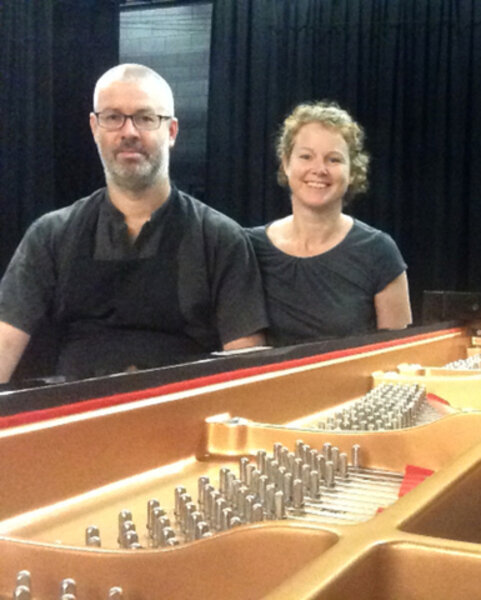
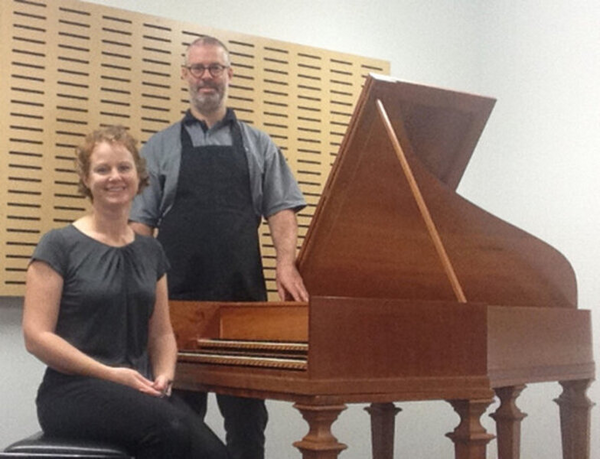
We are an independent business comprised of two qualified piano technicians with extensive experience working with pianos in concert halls, studios, schools and private homes. We have been based in Bathurst since 2018, also servicing Orange and Sydney on a regular basis. Among the institutions we look after are Kinross Wolaroi School, Mitchell Conservatorium, Newington College, Orange Regional Conservatorium, Reddam House and Scots All Saints College.
Our services have been used by a number of artists, ensembles and festivals including Alex Ranieri, Alexander Gadjiev, Alexander Gavrylyuk, Alexandre da Costa, Andrea Lam, Andrey Gugnin, Arseny Tarasevich-Nikolaev, Australian Ballet Company, Clemens Leske, Cold Chisel, Dan Sultan, Darwin Festival, Darwin Symphony Orchestra, David G Miller, Diana Doherty, Diana Weston, Fiona Ziegler, Gary Daley, Glebe Music Festival, Helena Rathbone, Ian Munro, Joan Baez, Konstantin Shamray, Leonie Cohen, Michael Kieran Harvey, Michael Tsalka, Mike Nock, Oberon Chamber Music Festival, Omega Ensemble, Out West Piano Fest, Piers Lane, Roger Woodward, Simon Tedeschi, Stanmore Music Festival, Stephanie McCallum, Streeton Trio, Sydney Symphony Orchestra, Tamara-Anna Cislowska, Teddy Tahu Rhodes, The Five Browns, Vatche Jambazian, Wynton Marsalis, Yanghee Kim and many others.
Jennifer Roberts
Jennifer received her training in Canada and USA, completing a Masters of Piano Technology at the Florida State University under Anne Garee. She has served an apprenticeship at the Aspen Music Festival, completed a rebuilding fellowship at Northwestern University in Chicago with master craftsman Ken Eschete, and received further training from the Sauter piano factory in Germany. She is also a qualified carillonist, and holds a double degree in Music and Music Education, having taught music for many years. Jennifer has been tuning in Sydney and regional NSW for the past two decades.
Marcelo Costi
Marcelo completed studies in piano technology at the University of Western Ontario in Canada, where he graduated with distinction. He has a broad knowledge of tuning theory and practice across instruments, having studied classical guitar and lute during his Music degree, as well being the university's harpsichord tuner. He also tinkered with fretted instruments in earlier years, before shifting his interests towards piano technology.
SERVICES
Below is a short list of standard services that we provide. If you need assistance with anything else, be it technical advice, long-term schedules, humidity control or simply having a chat about your instrument's needs, just get in touch with us. We are part of the local music community and we are here to help.
Regular piano care
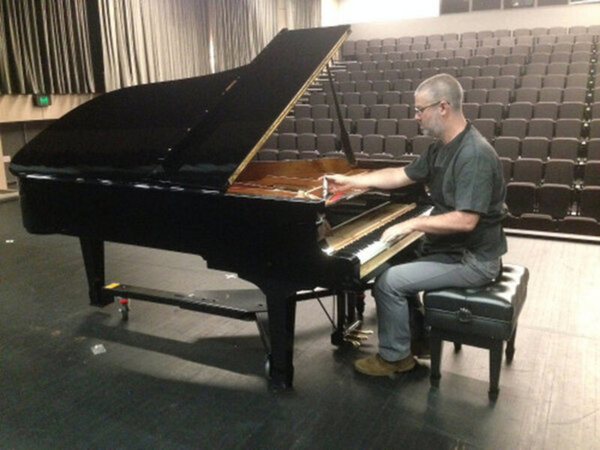
Tuning is the most frequent service that your piano is likely to need. Most pianos, even those that are not played regularly, need to be tuned once a year to stay close to pitch. Tuning stability is affected by changes in temperature and humidity, and instruments subjected to heavy use may need service more often. Concert venues, music teachers or musicians with finer ears require more frequent tunings to keep their pianos in top shape.
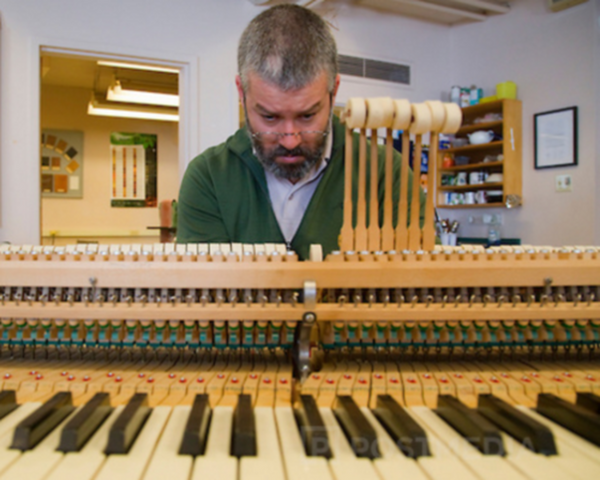
Voicing is the process of adjusting the sound of the piano, usually by reshaping the hammer felt with a file, softening it with needles or hardening it chemically. Hammer heads flatten with use as the felt compresses, enlarging the striking point and resulting in a harsh sound. A beautiful tone depends on a combination of factors, but it can only be achieved on a piano that is properly regulated, tuned and voiced.
Regulation affects the touch, which must be consistent and predictable on all keys, providing accurate feedback to the player. As most of the piano's internal parts are made of felt and wood, they can change with the weather and degrade as they age, and need to be regulated every now and then to stay within parameters.
Repairs commonly required include broken key tops, strings and hammers, and worn felts. Keeping your piano in good condition will improve playability, reduce wear and tear, and increase the instrument's longevity.
Institutional maintenance
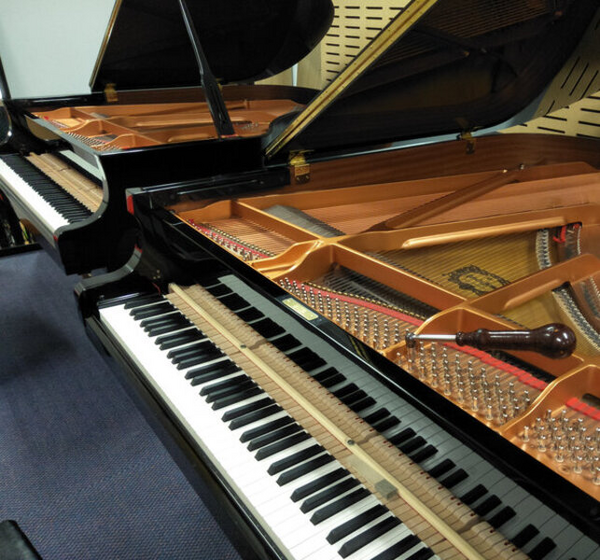
Maintaining a large inventory of instruments requires an approach that encompasses a broader range of considerations than individual private pianos. We have extensive experience in this area and can assist institutions in preparing a long-term maintenance schedule, tailored to their specific budgets and requirements. Here is a document that we prepared with more information on this subject, please get in touch and we can help you get started:

View document
Rebuilds
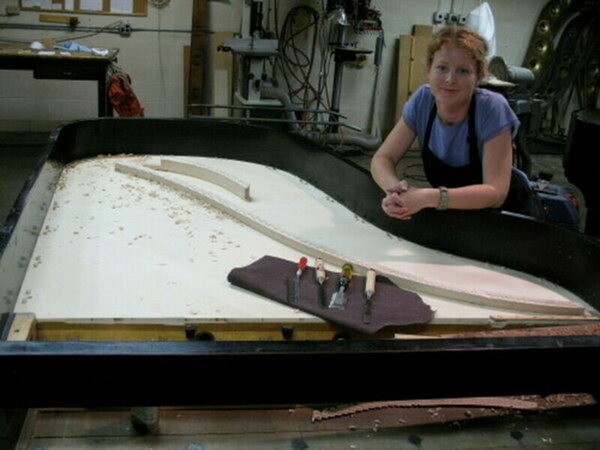
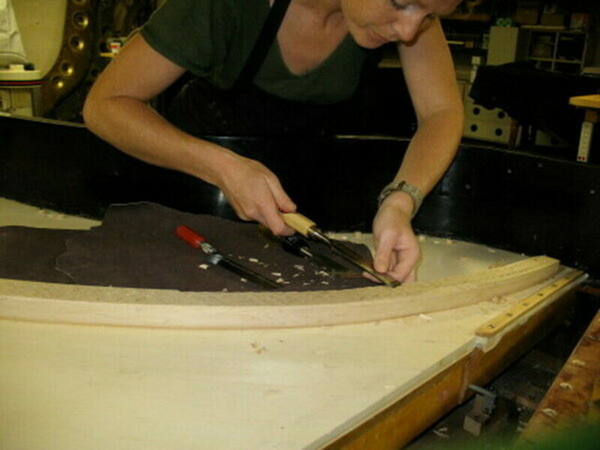
As with any mechanical device, pianos start deteriorating after a certain age, losing functionality as a musical instrument. Major works like restringing, pin block replacement, bridgework, new keyboard and action replacement will extend the instrument's useful life and protect its value. We restring pianos using hybrid scaling to improve tonal consistency and tuning stability, and nickel-plated wire to prevent oxidation. We can also redesign the action geometry to correct design faults, or simply to enhance the tone and touch of your piano.
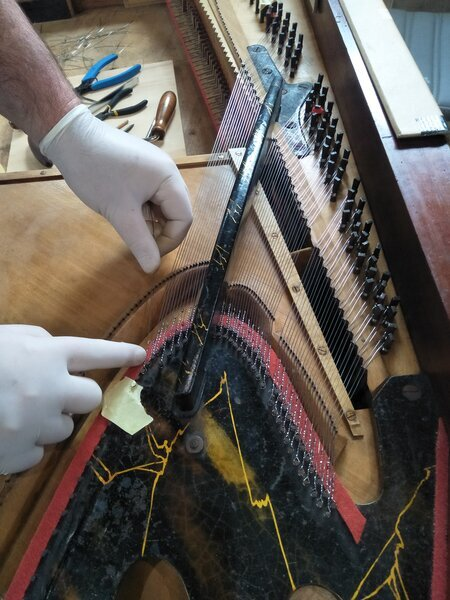
Alongside modern piano rebuilds, we can also restore historical instruments, working with materials and techniques that are appropriate for the era in which the instruments were originally built. We can source custom-made hardware, period bass strings and music wire, and traditional leathers and felts to revive the touch and tone characteristic of their time.
GALLERY
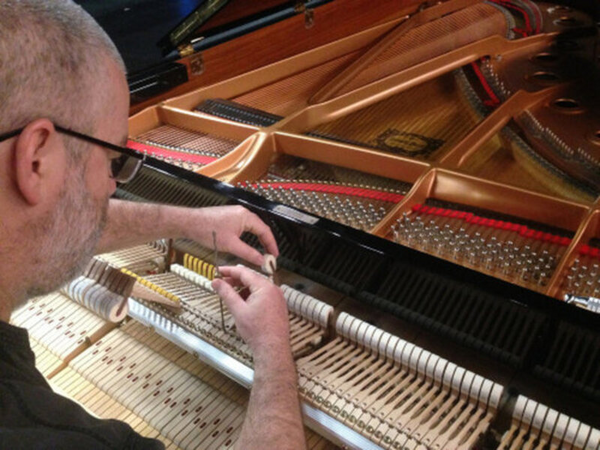
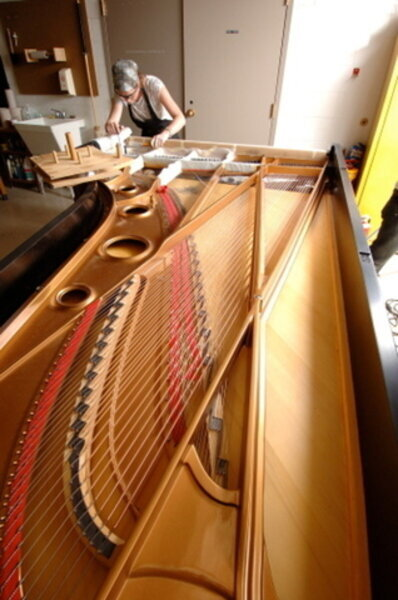
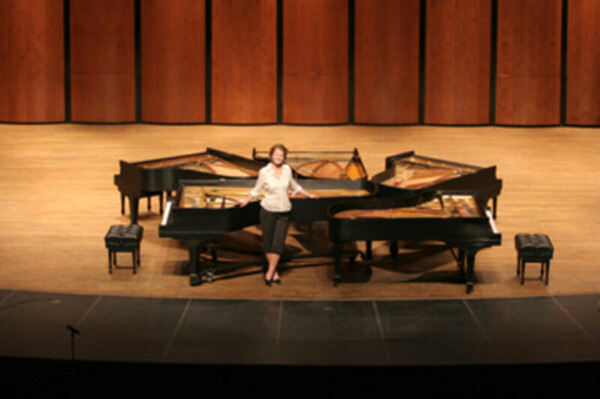
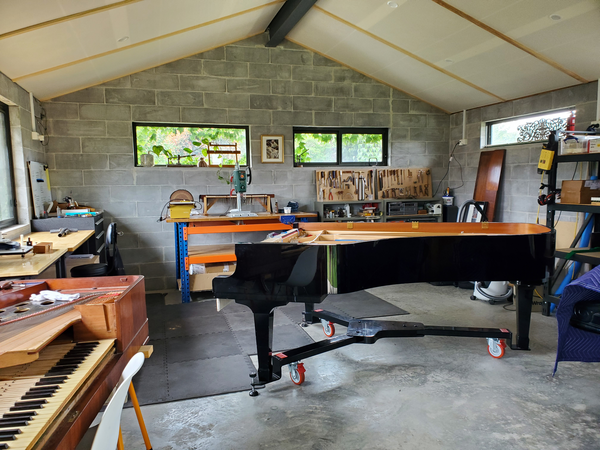
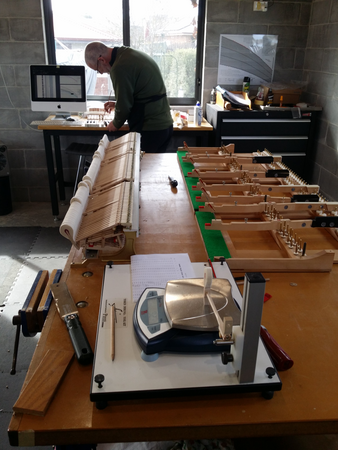
Selected Projects
Coming up:
2028 - Yamaha C3
2027 - Broadwood Upright
2026 - Yamaha C3
2026 - Collard & Collard Grand
2026 - Zuckermann Flemish Double Harpsichord
Completed:
2026 - Bechstein E
2025 - Yamaha C7
2025 - Shigeru Kawai SK7
2023 - Yamaha C3
2022 - Steinway D
2021 - Robertson Square
2020 - Yamaha C7
2019 - Bechstein K
View images
FREQUENTLY ASKED QUESTIONS
How often should I tune my piano?
Most piano manufacturers recommend having the piano tuned every six months. Depending on your expectations and your budget, a low-usage home piano may keep well with an annual tuning, though extra visits certainly allow for a more refined and stable result. Institution instruments are normally subject to higher usage and require more frequent tunings. For public performances and recordings, a fresh tuning before each session is the standard.
How much does tuning cost?
| Location | $ |
|---|---|
| Bathurst & Orange | 253 |
| Sydney | 286 |
The amounts above include GST are reviewed in July every year. Note that these charges apply to pianos that have been regularly serviced and are close to pitch. If it has been a while since their last tuning, it may cost a little more or perhaps require a second visit shortly afterwards. If you live outside our local area, additional travel surcharges may apply. Sydney trips are reserved for our regular customers only.
What is included in that charge?
Usually we make a few minor adjustments in addition to the tuning, to make sure your piano is functioning well. Services like pedal adjustments, lubrication and minor voicing are done each time we tune. Over time this adds up to a piano in much better shape than one that has simply been tuned. Of course, if it needs more than the odd adjustment, we will let you know. If it is the case, we can book a more thorough service separately.
How far in advance should I book?
Depending on your flexibility, we can generally accommodate you within a few weeks. If you do require a specific date, it is best to organise that as early as you can, as we travel frequently and may not be around when you need us. During school holidays (January, April, July and October) we are particularly busy with our institutions and rarely available for other work.
Can I do anything to help?
If you have any personal objects currently living on the top of the piano, perhaps it would be safer for you to relocate them before we arrive. Once we are ready to start, a quiet space is essential, as tuning does require our full attention. Apart from that, a glass of water and access to a restroom are always welcome.
I've got a few more questions...
View more questions
CONTACT
We prefer email as a first point of contact. We may take a day or three to reply, your patience is appreciated.

info@narrowfifth.com
Our workshop is not open to the general public, visits by appointment only.

Bathurst NSW - Wiradjuri Country
Narrow Fifth © 2018-2026
We like our privacy, we respect yours.
This is a static website, built at home with open-source software.
No javascript, no cookies, no trackers, no ads, no data collected from your visit.
Last updated July 2026